India’s Freedom Struggle Was Not Non-Violence Alone, But Centuries of Unbreakable Resilience Against Colonial Atrocity
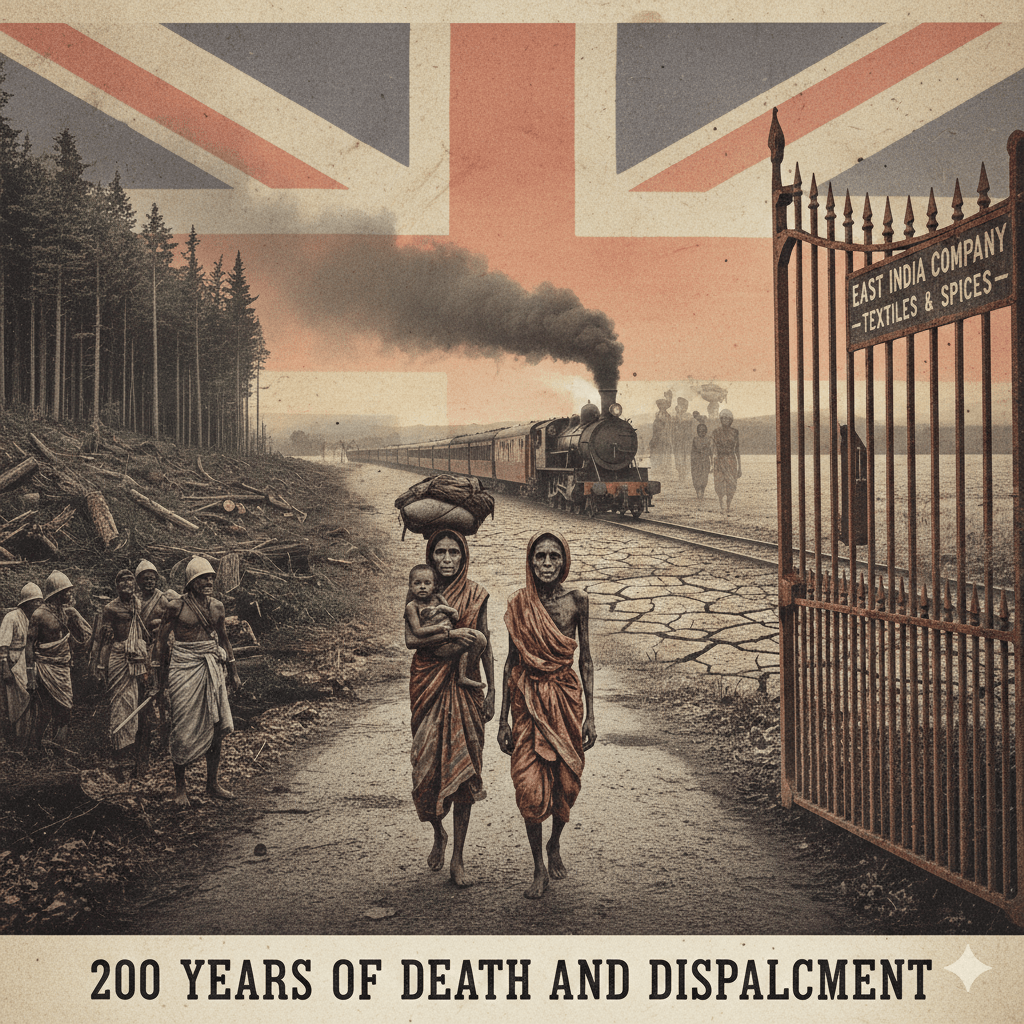
1. Deaths from Policy-Induced Famines
British economic policies (high taxes, food exports during shortages, laissez-faire relief) turned droughts into mass mortality events. Famines became more frequent and deadly under colonial rule.
- Total famine deaths (1770–1943) — Conservative estimates: 30–60 million. Some sources cite higher figures when including excess mortality from malnutrition/disease.
- Great Bengal Famine (1770): 7–10 million (1/3 of Bengal’s population).
- Late 19th-century famines (1876–1900): 12–29 million.
- Bengal Famine (1943): 2–3 million (Churchill’s policies diverted food amid WWII).
- Excess deaths (1880–1920 alone, from colonial exploitation): 50–165 million (per demographic studies comparing to pre-colonial baselines).
2. Deaths from Direct Violence and Repression
- 1857 Rebellion → British reprisals (mass executions, village burnings, cannon executions): 100,000–800,000 Indian deaths (mostly civilians; British losses ~6,000–13,000).
- Jallianwala Bagh Massacre (1919) → Troops fired on unarmed crowd: Official: 379 killed, 1,200 wounded; Indian estimates: 1,000+ killed.
- Quit India Movement (1942) → Police/army firings, bombings: Official: ~1,000 killed; Unofficial: 4,000–10,000.
- Other massacres/repressions (e.g., Moplah 1921, tribal revolts) → Added tens of thousands.
3. Deaths and Displacement from Partition (1947)
The hasty British withdrawal and division along religious lines triggered communal violence.
- Deaths — 1–2 million (massacres, riots, trains full of corpses).
- Displacement — 12–20 million people forced to migrate (largest in history); Hindus/Sikhs to India, Muslims to Pakistan. Refugee crises caused further deaths from disease/exposure.
Overall Toll
- Total deaths attributable to colonial rule (famines + violence + exploitation) → Tens of millions directly; up to 100–165 million in excess deaths during peak imperial period.
- The overwhelming violence targeted colonized Indians, who endured it while resisting through rebellions, protests, and survival.
This era’s suffering stemmed from systemic exploitation and repression, not mutual conflict. Post-1947, independent India ended major famines through better policies. The resilience of Indians—absorbing blow after blow yet persisting—ultimately made rule unsustainable.

Leave a comment