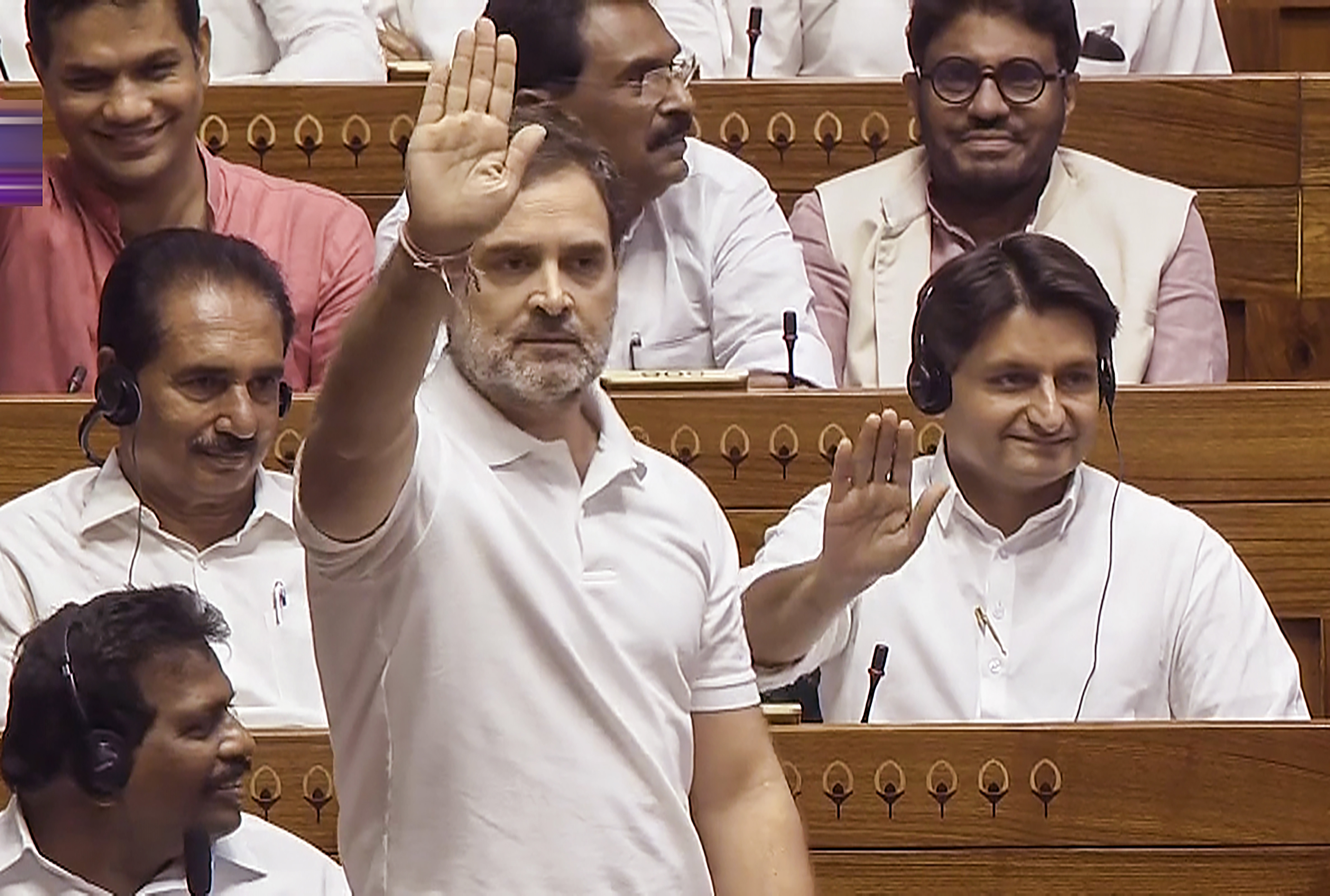
On the 1st of July, 2024, Rahul Gandhi, scion of the Nehru-Gandhi political dynasty in India, delivered a speech in the hallowed halls of the Indian Parliament that resonated deeply with both his supporters and critics alike. Known for his nuanced approach to political issues and occasional outspokenness, Gandhi’s address on this particular day was marked by a new level of authority and coherence, making it a pivotal moment in contemporary Indian political discourse.
Setting the Stage: Rahul Gandhi’s Political Journey
To truly appreciate the significance of Rahul Gandhi’s speech, it’s crucial to understand his journey in Indian politics. Born into one of India’s most prominent political families, Rahul Gandhi inherited a legacy that included three former Prime Ministers—his great-grandfather Jawaharlal Nehru, grandmother Indira Gandhi, and father Rajiv Gandhi. Despite his political lineage, Gandhi’s career has been marked by both admiration and skepticism. His early forays into politics were met with skepticism over his capabilities and commitment, often seen as riding on his family name rather than merit.
However, over the years, Rahul Gandhi has carved out his own identity within the Indian National Congress (INC), the political party that has been at the forefront of India’s independence movement and subsequent governance. His leadership roles within the party, including his tenure as its president, have been characterized by efforts to rejuvenate the Congress and redefine its ideological stance in contemporary Indian politics.
The Context of the Speech: Political Climate in 2024
The year 2024 was a crucial juncture in Indian politics. The country had just concluded a general election that saw significant shifts in the political landscape. The incumbent government, led by the Bharatiya Janata Party (BJP), had secured a renewed mandate, continuing its dominance in the Indian political arena. Against this backdrop, Rahul Gandhi’s speech in Parliament held particular significance as it aimed to critique the government’s policies, articulate an alternative vision, and rally support for his party’s agenda.
Analyzing Rahul Gandhi’s Speech: Themes and Content
1. Authority and Confidence
Observers noted a marked difference in Rahul Gandhi’s demeanor during his July 1st speech. He appeared more authoritative and confident than in previous addresses, signaling a growing maturity and command over his political narrative. This newfound confidence was reflected in his delivery, which was clear, measured, and devoid of the hesitation that had sometimes marked his earlier speeches.
2. Substance and Clarity of Message
One of the most striking aspects of Gandhi’s speech was its substantive content. He delved into a range of issues affecting the country, from economic policies to social justice concerns, demonstrating a comprehensive understanding of the challenges facing India. His arguments were backed by data, historical context, and pragmatic solutions, resonating with those who value substance over rhetoric in political discourse.
3. Critique of Government Policies
Central to Rahul Gandhi’s address was a critique of the incumbent government’s policies. He highlighted areas where he believed the government had failed to deliver on its promises or had pursued policies detrimental to the interests of the common citizen. Whether it was economic inequality, unemployment rates, or social tensions, Gandhi’s critique was sharp yet grounded in a broader vision for inclusive growth and social harmony.
4. Alternative Vision for India
Beyond criticism, Gandhi articulated an alternative vision for India—a vision grounded in principles of social justice, economic equity, and environmental sustainability. He proposed specific policy measures aimed at addressing income disparities, enhancing social welfare programs, and promoting sustainable development practices. This vision was not merely aspirational but backed by concrete policy proposals, demonstrating Gandhi’s commitment to substantive change.
5. Appeal to Unity and Diversity
A recurring theme in Rahul Gandhi’s speech was his appeal to India’s unity in diversity. He emphasized the importance of embracing the country’s pluralistic heritage while safeguarding the rights and dignity of every individual, irrespective of their background. This appeal resonated with sections of society that prioritize inclusivity and secularism as foundational principles of Indian democracy.
Reception and Impact
The reception to Rahul Gandhi’s speech was multifaceted, reflecting the polarized nature of Indian politics. Supporters of the Congress party lauded his clarity of vision, articulation of policies, and assertive stance against the ruling establishment. They saw his speech as a rallying cry for opposition unity and a renewed push for progressive policies.
Critics, on the other hand, questioned the timing and effectiveness of Gandhi’s critique, arguing that it lacked concrete alternatives and failed to acknowledge the successes of the incumbent government. Some viewed his speech as rhetoric without substance, highlighting the challenges Rahul Gandhi faces in convincing a broader electorate of his leadership credentials.
Conclusion: Rahul Gandhi’s Speech in Historical Context
In historical context, Rahul Gandhi’s July 1st speech in Parliament may be seen as a pivotal moment in his political career. It marked a departure from earlier perceptions of him as a reluctant politician to one who could command the national stage with authority and clarity. The speech underscored his evolving leadership style and his growing influence within the Congress party and the broader opposition coalition.
Looking forward, the impact of Rahul Gandhi’s speech extends beyond immediate political calculations. It raises fundamental questions about the future trajectory of Indian democracy, the role of opposition politics, and the nature of governance in a rapidly changing global landscape. As India navigates complex challenges—economic, social, and environmental—Rahul Gandhi’s articulation of a progressive vision provides a crucial reference point for shaping public discourse and policy agendas.
In conclusion, Rahul Gandhi’s speech on July 1st, 2024, stands as a testament to his evolving political persona and his aspirations for a more inclusive and equitable India. Whether it will herald a new chapter in Indian politics remains to be seen, but its significance as a moment of clarity and assertion cannot be overstated. As India continues its journey as the world’s largest democracy, speeches like Gandhi’s serve as reminders of the power of ideas and the responsibility of political leadership in shaping the nation’s future.


Leave a comment